
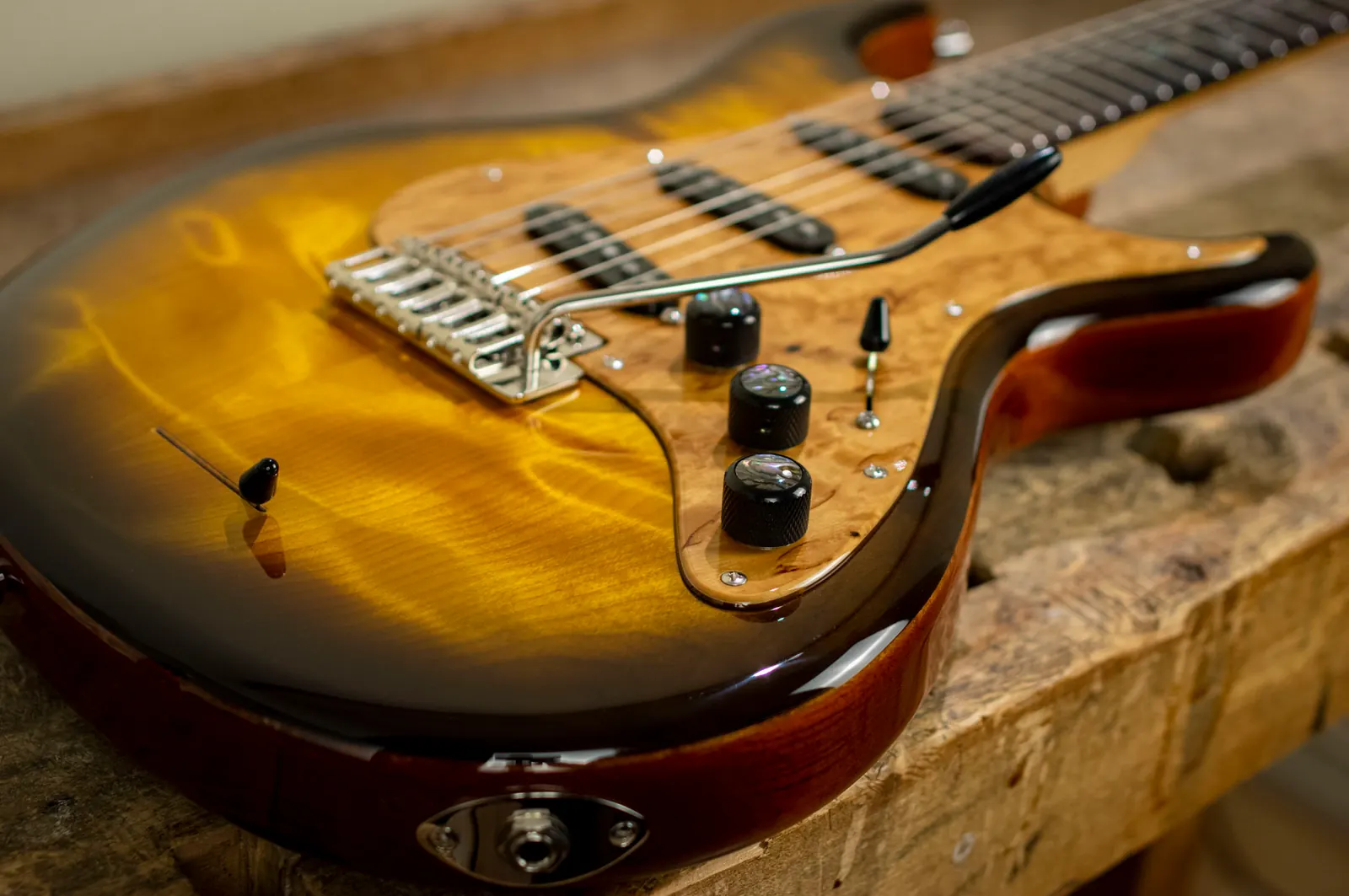

A sunburst Ruokangas VSOP Deluxe on a workbench. The small black X-lok switch rises from the top, behind the bridge.

Tremolo lock for electric guitar

Float it.
Or lock it.

X-lok clamps the tremolo block from inside the guitar, and you work it from the front: a switch behind the bridge, always within reach. One flick and the bridge stands still, wherever it sits, with no locking position to preset or readjust. Flick it back and the tremolo floats as if X-lok weren't there.

It locks the tremolo wherever it sits. Nothing to preset, nothing to readjust.

The switch

Two positions.
No tools.

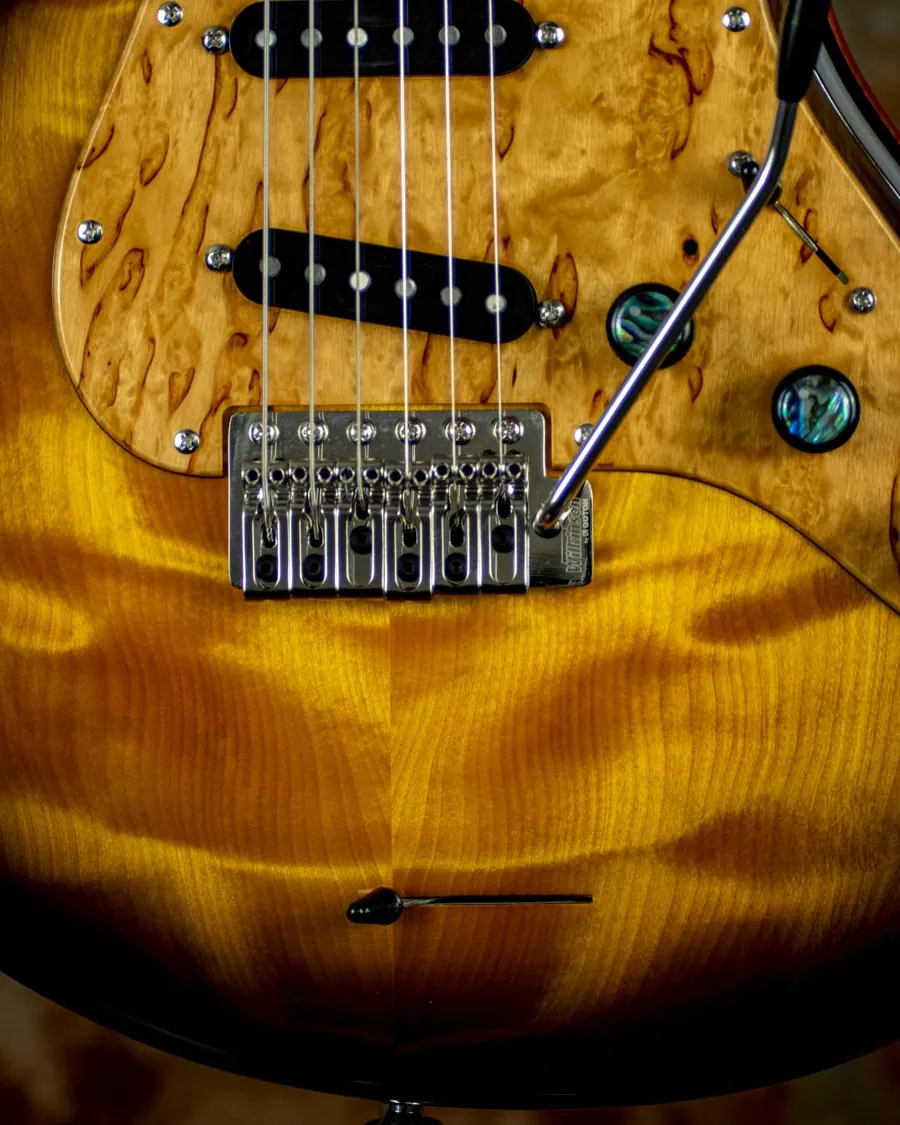
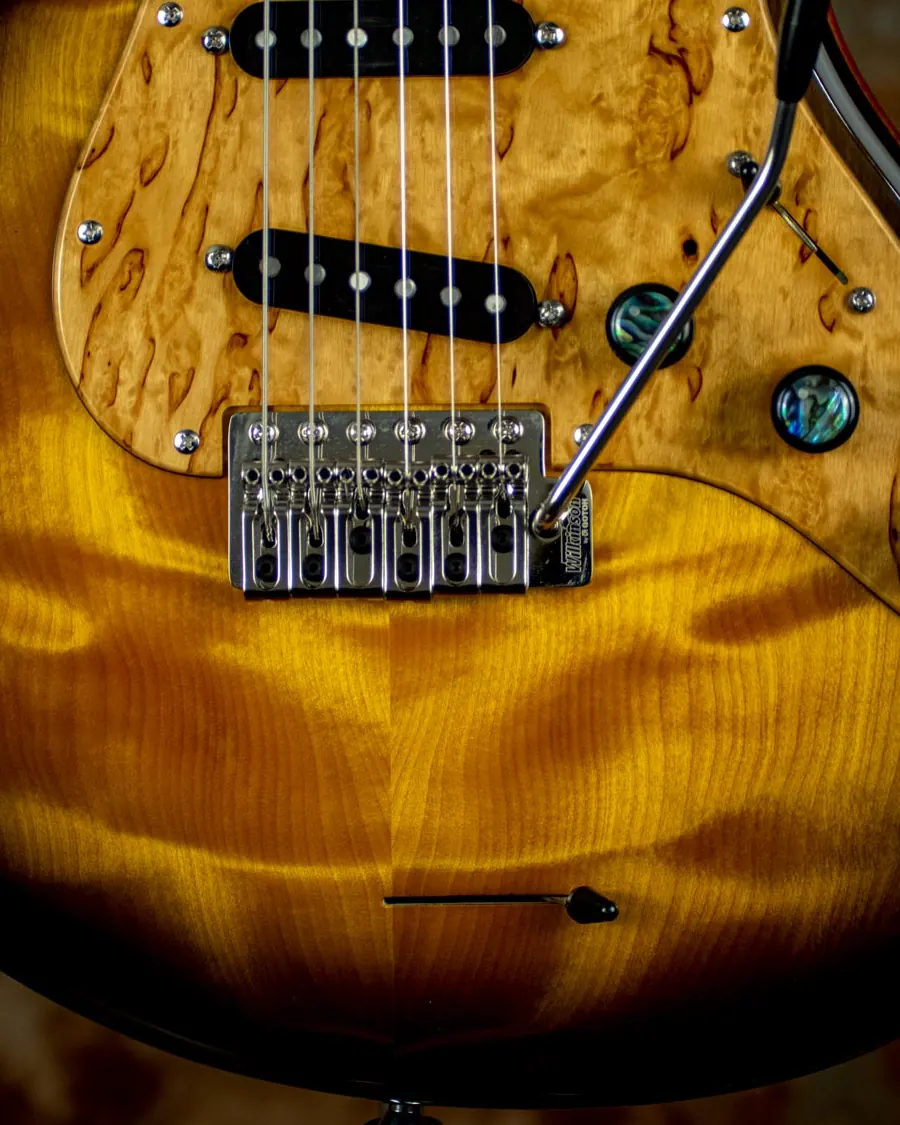
The switch comes up through the top, just behind the bridge, and works like a pickup selector. To the left, the tremolo is locked. To the right, it's free. Between songs, or in the middle of one.

Locked: the bridge is held still.

Front of the guitar with the X-lok switch turned left: locked. Front of the guitar with the X-lok switch turned right: free.
Front: the switch below the bridge. Click it.
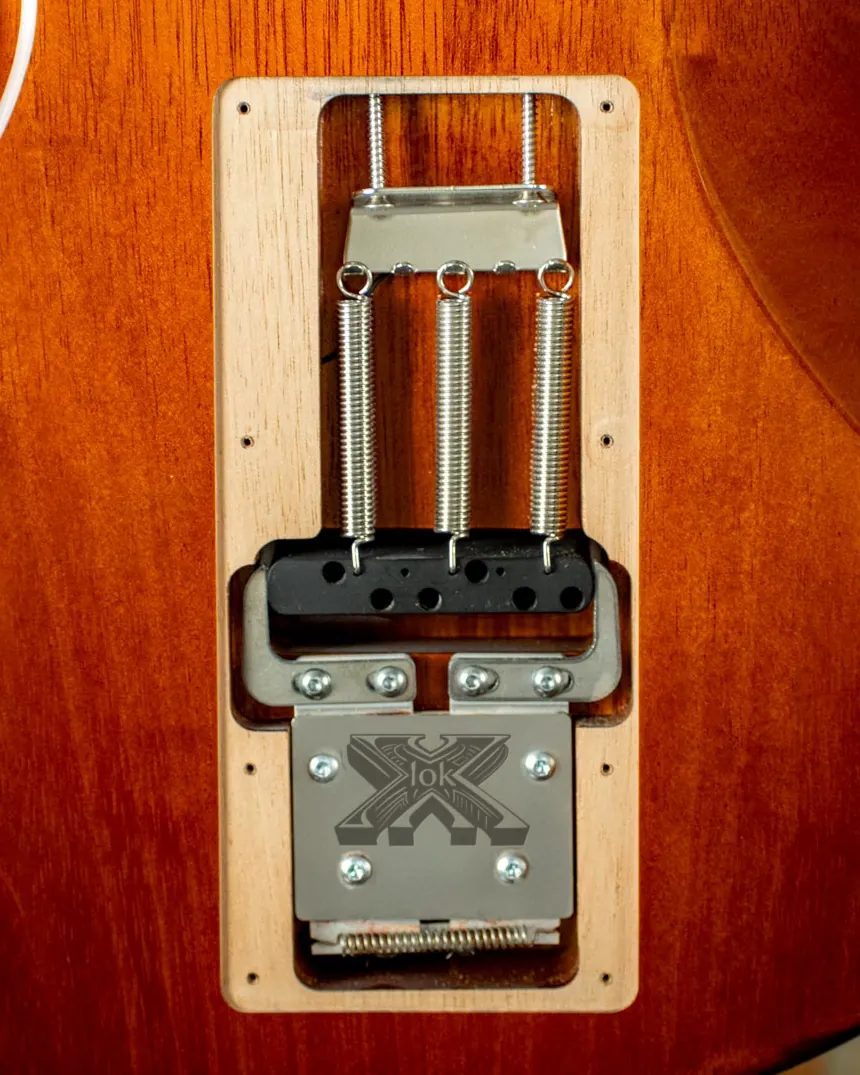
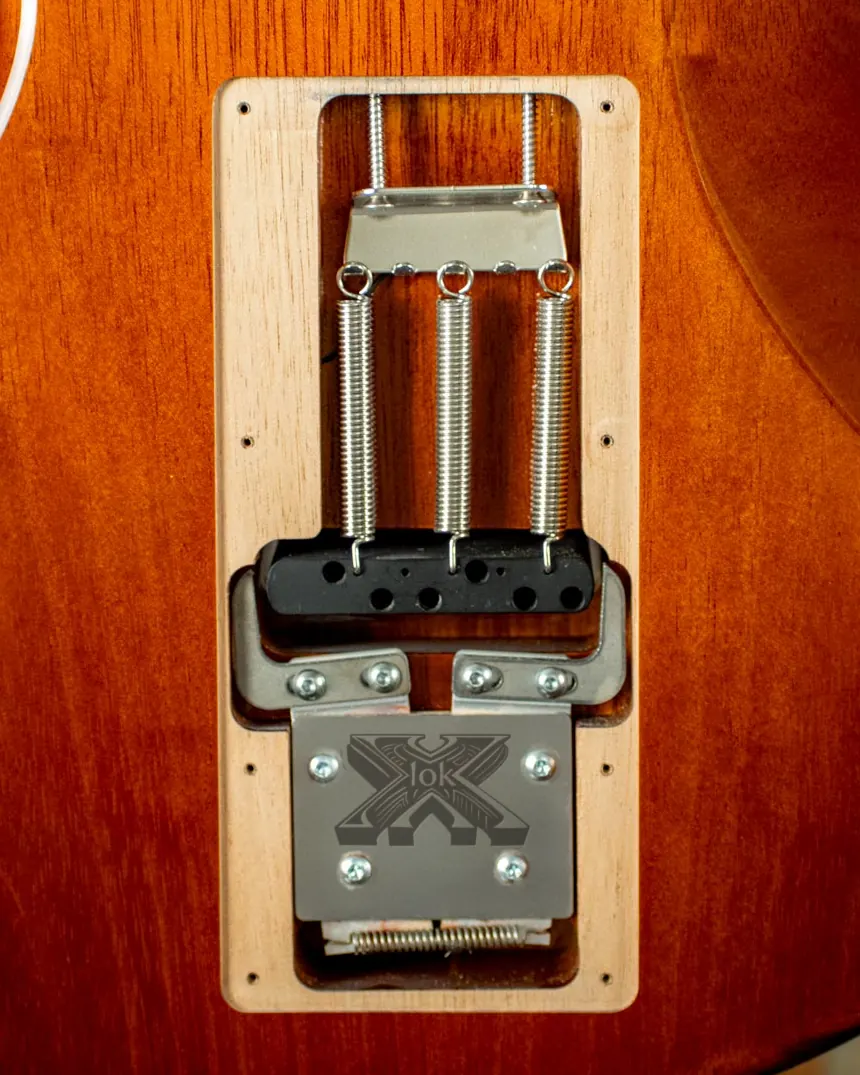
Back of the guitar, cover off: X-lok's jaws closed on the tremolo block. Back of the guitar, cover off: X-lok's jaws open, clear of the tremolo block.
Back, cover off: X-lok in the spring cavity

Why lock a tremolo

Everything a fixed bridge does well. Only when you want it.

  1. 01

    Locks wherever it sits

    Most tremolo stops hold the bridge at a position set beforehand with screws, and strings, springs, temperature and humidity soon move the tremolo away from it. X-lok has no preset position: its jaws close on the block exactly where it is, every time.

  2. 02

    Drop tunings on the fly

    Drop the low E to D, with a D-Tuna or the tuner, and the other five strings stay where they were.

  3. 03

    Notes that ring longer

    A locked tremolo doesn't vibrate with the strings, so they keep their energy and sustain longer.

  4. 04

    Bends that stay in tune

    Bend one string of a double-stop and the bridge no longer tips forward and flattens the other.

  5. 05

    No flutter when you dig in

    Pick hard on a floating bridge and it rocks under your hand, and the notes waver with it. Locked, every note holds steady. Flick the switch, and you're free to dive.

  6. 06

    Untouched when free

    Unlocked, the jaws stand clear of the block. The tremolo feels and sounds exactly as it did before.

Inside

Turn it over. Take it apart.

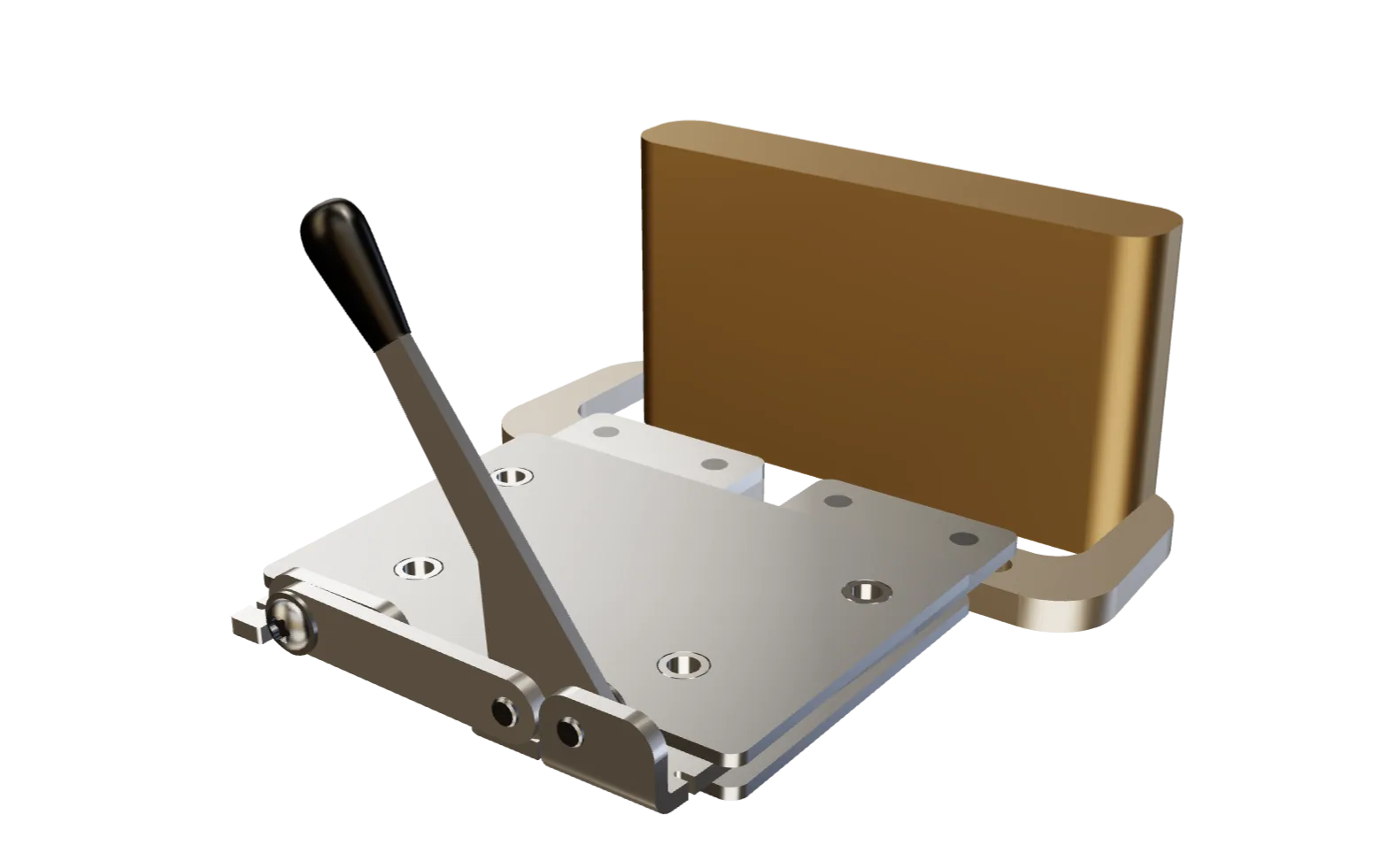
This is X-lok itself, drawn from the model its parts are cut from. Drag to turn it, flick the switch, or take it apart to see how it works.

X-lok: two steel plates with a jaw body on each side between them, jaws gripping the ends of a tremolo block, and the switch lever rising at the far end.
  1. Two jaws that float

    Each jaw turns on its own pivot, and nothing fixes where it closes. Both close until both touch, so the clamp finds the block wherever it is. That is why there is nothing to preset.

  2. A toggle that holds itself

    The switch straightens a toggle between the two jaw bodies, and the jaws close. Taken just past straight, it stays there by the clamp's own force. Flick it back and a spring opens the jaws, clear of the block.

  3. One frame, many tremolos

    The jaws are screwed on and interchangeable, so the same frame fits different tremolo blocks: Wilkinson VS-VG and Floyd Rose today, each with its own set of jaws.

The back of the VSOP Deluxe, with the X-lok back cover.

For builders

Made to be built in.

X-lok is fitted by the builder, in the guitar's spring cavity. We supply it to luthiers and guitar companies.

Mounting
In the tremolo spring cavity, behind the block, screwed to the wood under the top.
The switch
Comes up through a narrow slot behind the bridge, with a Strat-style tip.
Tremolos
Jaw sets for Wilkinson VS-VG and Floyd Rose blocks. Ask about others.
The tremolo itself
Stays as it is. Nothing on the tremolo or its springs changes.
Body
Designed for Strat-thickness bodies, about 45 mm.
Materials
Stainless steel throughout, with duplex stainless jaws that keep their spring.
Setting the grip
From the back, with the jaw screws: firm to lock, no more.

The story

X-lok began in 2011 as a prototype by Finnish designer Seppo Silaste. Its first versions, turned with a thumb wheel, have been on stage for years in Ruokangas guitars. The switch came next. The latest X-lok refines it in laser-cut stainless steel: lighter, simpler to fit, and made to be built in numbers.

Seppo Silaste, designer

Contact

Building a guitar with a tremolo?

Talk to us about fitting X-lok. For luthiers and guitar companies.

info@xlokguitar.com